

Researched & written by GardeningNews.co.uk
No sun, no problem: how north-facing and heavily shaded plots can still burst with life, colour, and character
It is one of the most common complaints heard by garden centre staff and horticultural advisers across the UK. The garden faces the wrong way. Nothing grows. What’s the point? For millions of homeowners in Britain’s terraced streets, tightly packed new builds, and Victorian townhouses, a shaded plot can feel like a lost cause before a single seed is sown.
But gardening experts and horticulturalists say that view is badly wrong – and that with the right approach, a shaded garden can be every bit as beautiful, and in some ways more interesting, than one bathed in full sun.
Understanding what you actually have
The first step, specialists say, is to stop thinking of shade as an absence and start thinking of it as a condition – one that a remarkable range of plants have spent millions of years evolving specifically to thrive in.
There is also an important distinction to make. A garden that receives no direct sunlight is not the same as a dark garden. Reflected light, open sky above, and the difference between dense shade cast by a building and the dappled shade beneath a tree all matter enormously. Most shaded UK gardens receive more usable light than their owners realise.
The plants that will transform a shaded space
The RHS consistently recommends a core palette of shade-tolerant plants that can bring genuine colour and structure to even the most challenging plots.
Ferns are perhaps the most versatile. Species such as the hart’s tongue fern and the soft shield fern are fully hardy, evergreen, and will thrive in deep shade where almost nothing else will. They bring lush, architectural texture that holds its own through every season of the year.
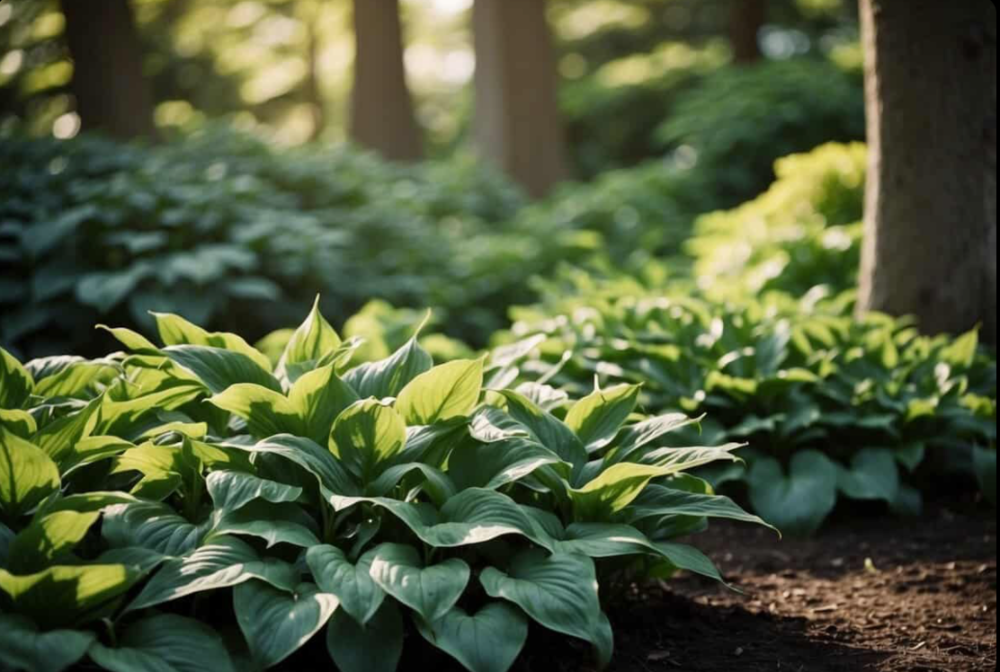
Hostas have become one of Britain’s best loved shade plants for good reason. Their bold, sculptural leaves – available in everything from deep green to silver-blue and gold – create a sophisticated look that many sun-drenched gardens simply cannot match. Planted en masse, they can turn a narrow north-facing border into something genuinely striking.
For flowers, the options are wider than most people expect. Astrantia produces delicate, intricate blooms from late spring through summer and positively prefers cool, shaded conditions. Foxgloves – technically biennials, but they self-seed generously – will tower dramatically in shaded borders and are among the most important plants for bumblebees in the UK. Bleeding heart, with its elegant arching stems and pendant pink flowers, is a cottage garden classic that asks for nothing more than shade and moisture.
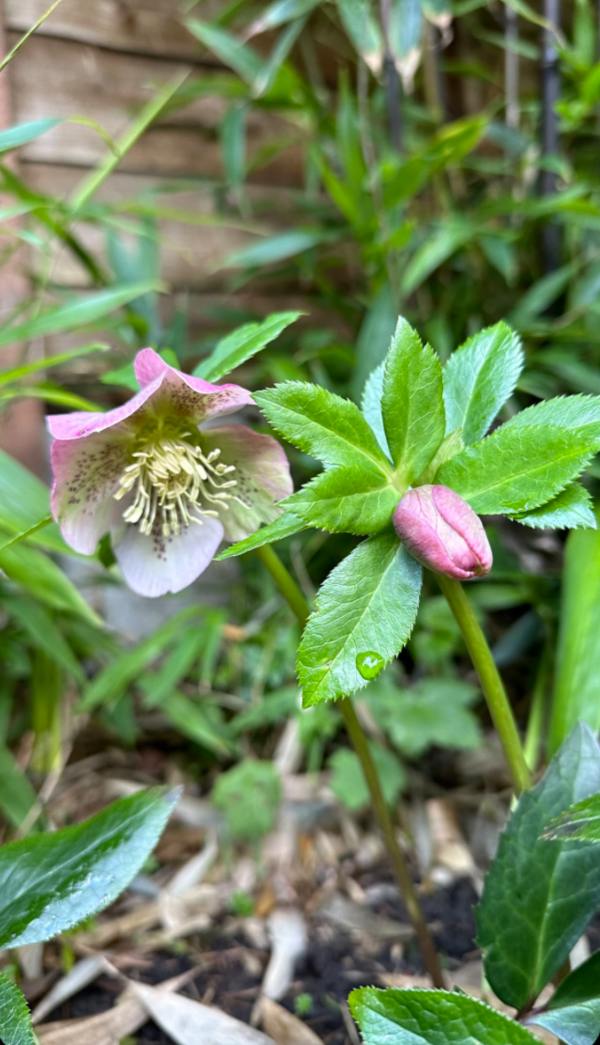
For late winter and early spring interest, few plants rival hellebores. Their nodding flowers in shades of white, plum, deep burgundy, and pale yellow appear at the darkest, most dispiriting time of year – a quality that makes them, for many gardeners, worth their weight in gold.
Climbers can also play a powerful role in a shaded garden. Hydrangea anomala – the climbing hydrangea – is slow to establish but ultimately spectacular, covering a shaded north-facing wall with large white lace cap flowers each summer and attractive peeling bark in winter.
Thinking beyond flowers
Some of the most successful shaded gardens in the UK rely less on flowers and more on the interplay of foliage, texture, and form. The Japanese-influenced approach – using mosses, ferns, rounded stones, and carefully placed structural plants – can create a contemplative, beautifully composed space that feels intentional rather than compromised.
Ivy, often dismissed as a weed, deserves serious reconsideration. Modern cultivars offer extraordinary variety of leaf shape, colour, and variegation, and the RHS has highlighted ivy as one of the most important late-season plants for pollinators in Britain, with its flowers providing a vital nectar source for insects in autumn when little else is available.
Epimediums – known informally as barrenwort – are among the toughest ground cover plants in cultivation. They will grow in dry shade beneath trees where even grass gives up, producing delicate flowers in spring and attractive foliage for most of the year.
Making the most of the space itself
Design choices matter as much as plant selection. Pale-coloured surfaces – light gravel, white or cream rendered walls, pale paving – reflect available light back into the space and can make a shaded garden feel significantly brighter without adding a single plant. A well-placed mirror, properly designed for outdoor use, can have a transformative effect in a small courtyard.
Water, too, works particularly well in shade. A small container pond or wall-mounted water feature introduces movement and sound, and supports the kind of wildlife – frogs, newts, aquatic insects – that actually prefers cool, shaded, damp conditions.
The wildlife angle
There is one further argument for embracing rather than fighting the shaded garden, and it comes from ecology. Research from the RHS and the Wildlife Trusts consistently shows that shaded, sheltered, moisture-retentive gardens support a distinct and valuable range of wildlife – including ground beetles, amphibians, hedgehogs, and many moth species – that sun-baked plots simply cannot.
In a country that has lost a third of its pollinating insects and where hedgehog numbers have declined dramatically, a cool, plant-rich shaded garden is not a consolation prize. According to the science, it is exactly what is needed.
The shaded garden, it turns out, was never really the problem. It just needed the right plants – and a change of perspective.