

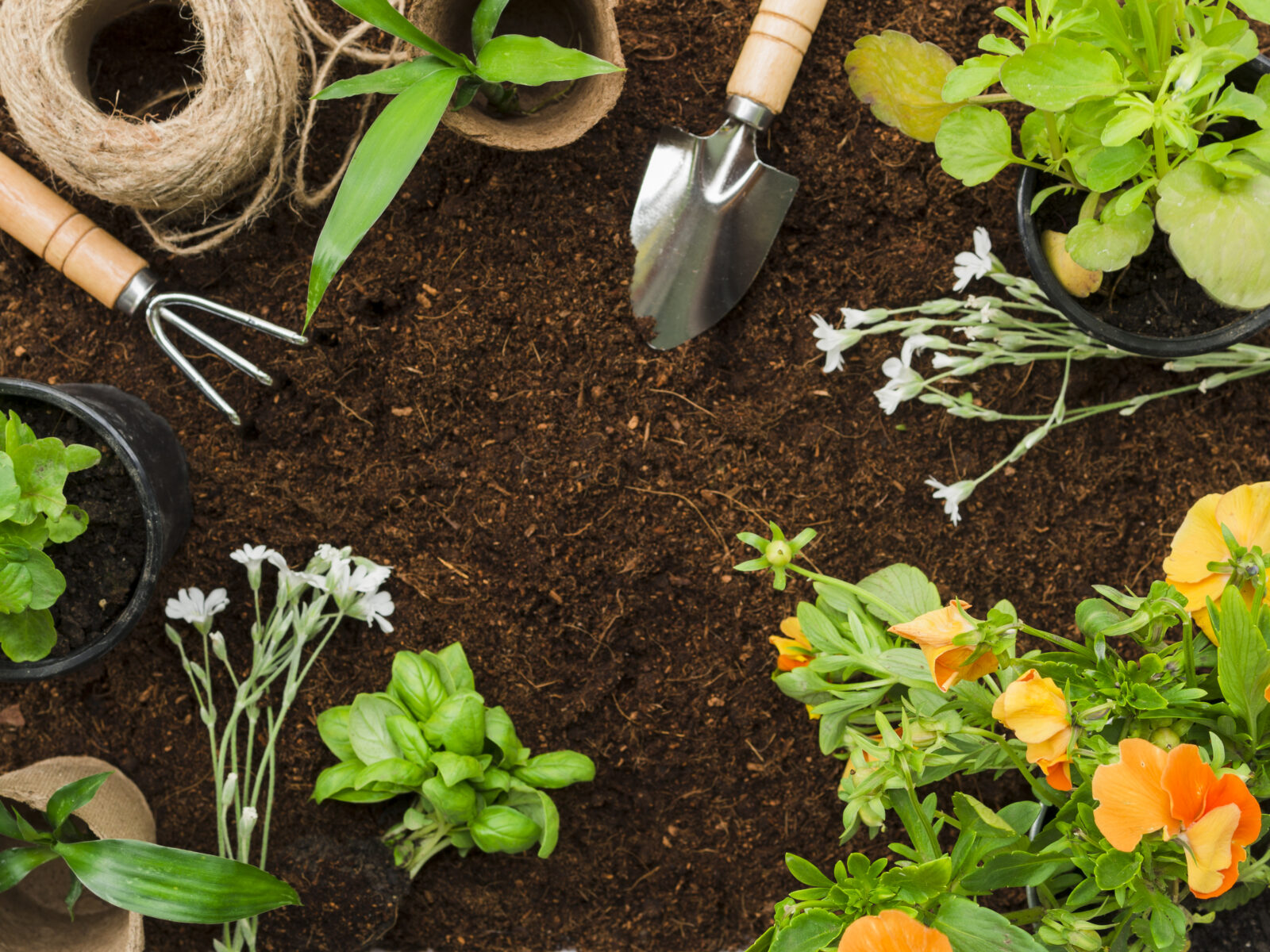
- Hand Trowel 🌱
Why? Ideal for planting, digging small holes, and removing weeds.
What to Look For: A sturdy, stainless-steel or carbon-steel blade with a comfortable wooden or rubber grip.
🔹 Avoid flimsy plastic trowels—they break easily.
- Hand Fork 🌿
Why? Helps loosen compacted soil and aerate small garden beds.
What to Look For: A robust, rust-resistant metal fork with a strong handle.
🔹 Avoid poorly-made forks with weak tines that bend in hard soil.
- Secateurs (Pruners) ✂️
Why? Essential for trimming plants, deadheading flowers, and cutting small branches.
What to Look For: Bypass secateurs for clean cuts, and an ergonomic grip for comfort.
🔹 Avoid anvil pruners unless cutting deadwood—they can crush live stems.
- Digging Spade 🔄
Why? Perfect for digging, edging, and turning over soil.
What to Look For: A stainless-steel blade with a D-shaped handle for good grip.
🔹 Avoid oversized spades if you have a small garden—too cumbersome.
- Digging Fork 🍂
Why? Ideal for breaking up compact soil and lifting plants without damaging roots.
What to Look For: A strong, lightweight fork with four sturdy tines.
🔹 Avoid forks with welded joints—they may snap under pressure.
- Hoe (Dutch or Draw Hoe) 🧑🌾
Why? Essential for keeping weeds under control in vegetable beds and borders.
What to Look For: A comfortable handle length to reduce back strain.
🔹 Avoid buying multiple types—a single, well-made hoe is usually enough.
- Watering Can (with Rose Attachment) 💦
Why? Gentle watering for seedlings and plants where a hose might be too strong.
What to Look For: A sturdy, well-balanced can (5-10L) with a detachable rose.
🔹 Avoid heavy metal cans if you have limited storage space.
- Garden Rake 🍁
Why? Helps level soil and remove stones in vegetable patches.
What to Look For: A lightweight but strong rake with flexible tines.
🔹 Avoid plastic rakes for soil work—they’re better for leaves only.
- Lawn Rake (Spring-Tined Rake) 🍃
Why? Essential for clearing leaves and thatch from lawns.
What to Look For: A springy, metal-tined rake for easy leaf collection.
🔹 Avoid heavy-duty rakes unless you have a large lawn.
- Gardening Gloves 🧤
Why? Protects hands from thorns, blisters, and dirt.
What to Look For: A snug, flexible fit with good grip.
🔹 Avoid cheap gloves that rip easily or make hands sweat.
- Wheelbarrow (for Larger Gardens/Allotments) 🛞
Why? Useful for moving soil, compost, and heavy materials.
What to Look For: A rust-resistant, lightweight model with a sturdy wheel.
🔹 Avoid wheelbarrows with plastic frames—they don’t last.
Nice-to-Have (But Not Essential) Tools
- Edging Knife – Only necessary if you want ultra-neat lawn edges.
- Garden Kneeler or Stool – Handy but not essential unless you struggle with kneeling.
- Long-Handled Weeder – Useful if you have back issues, but a hand trowel usually suffices.
- Electric Strimmer – Not needed for most small UK gardens; a hand shears can do the job.
Garden Hose – Only essential for large gardens; a watering can is enough for small spaces.