

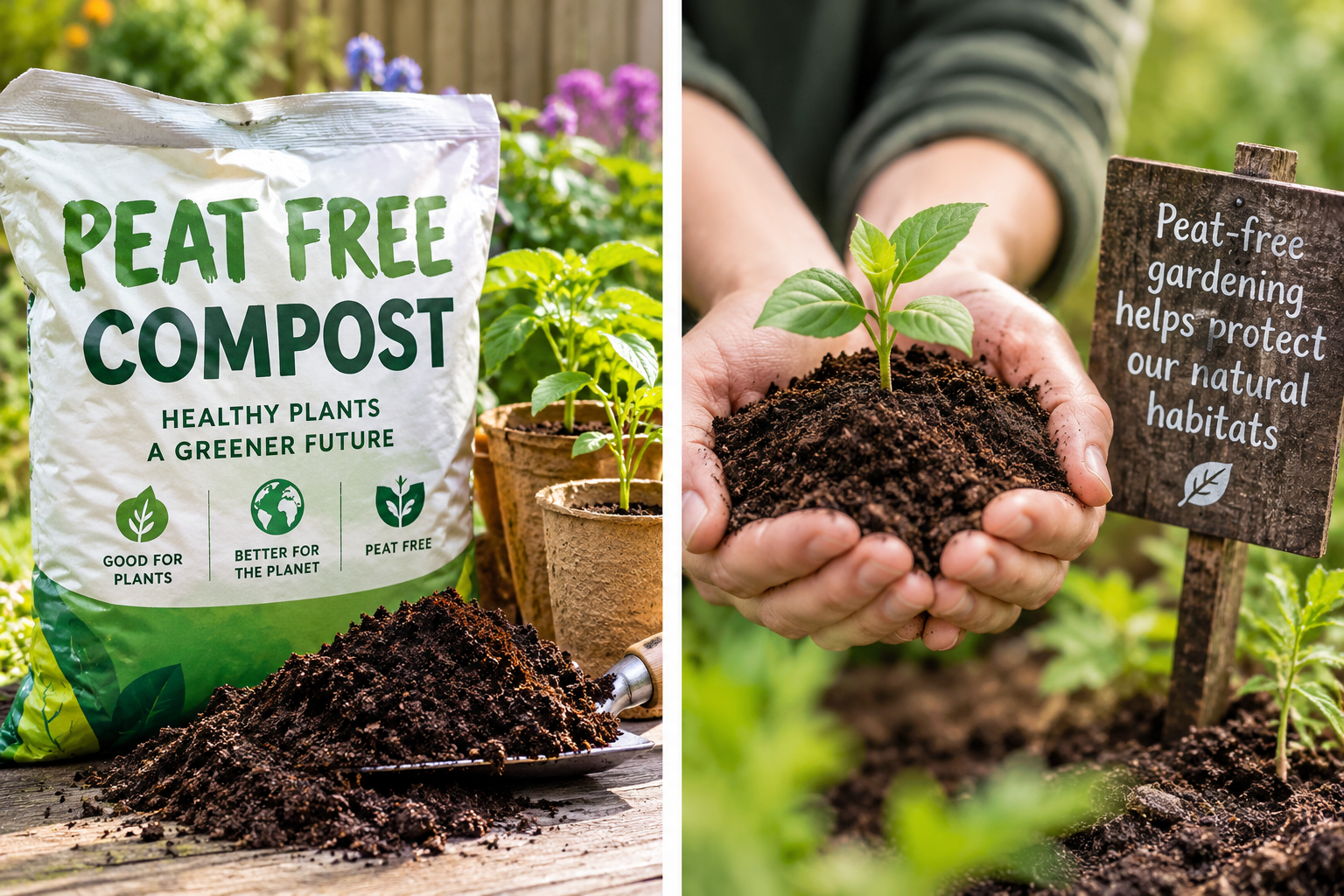
Peat extraction damages precious habitats and releases stored carbon. Yet the transition to peat-free gardening remains complicated, with growers facing practical challenges, government policy still unresolved and consumers left to navigate confusing claims about the plants they buy.
For years, gardeners have been encouraged to switch to peat-free compost. The environmental case is compelling: peatlands are important carbon stores, support specialised wildlife and help regulate water. Extracting peat for horticulture damages these ecosystems, which can take a very long time to recover.
But telling gardeners to make the switch is the easy part. Delivering a reliable, affordable alternative across the horticultural industry has proved much harder.
Recent developments show that the argument is far from settled. In October, the Peat Free Partnership brought together food growers, compost manufacturers, supermarkets and government representatives to discuss the practical challenges of moving commercial horticulture away from peat.
This is not simply a debate about which bag of compost to buy. It concerns how plants are produced, how much they cost, what consumers are told and who should bear the responsibility for making the transition work.
The environmental cost of convenience
Peat has long been valued by growers because of its physical properties, including its ability to retain water and provide a relatively consistent growing medium. Its widespread use helped establish modern commercial growing systems.
The problem is that peat is not an ordinary, quickly renewable gardening ingredient. Peatlands accumulate partially decomposed plant material over long periods, storing carbon and providing habitats that cannot simply be recreated by replacing extracted material with a newly planted area elsewhere.
The RHS has stopped selling peat-based compost and moved its operations towards a no-new-peat policy. It has also invested in research into alternatives and continues to call for legislation to end peat use in horticulture.
However, the government has not yet established a comprehensive legislative end to horticultural peat use. That leaves growers working through a transition in which environmental expectations, commercial costs and practical growing requirements do not always align.
Why can’t the industry simply switch?
Peat-free growing is not one single technology. Alternatives include materials such as wood fibre, coir and composted green waste, sometimes used in blends designed for particular crops.
Each material has different properties. Water retention, nutrient availability, structure and consistency can vary, meaning that growers may need to change irrigation systems, feeding programmes and other established practices.
For large commercial nurseries, these adjustments matter. A growing medium that works well for one crop may not perform equally well for another, and even small differences can have financial consequences when plants are produced at scale.
These are legitimate challenges, not reasons to dismiss peat-free growing. Research, investment and knowledge-sharing are essential if alternatives are to become more dependable.
But the question remains: after years of debate, why is the sector still working through these problems, and what commitments will ensure that progress continues?
What does this mean for ordinary gardeners?
For consumers, the transition can be confusing.
A bag labelled peat-free is relatively straightforward to understand, but the origins of a plant purchased from a garden centre may be less obvious. A plant may have started life in a peat-based growing medium before being transferred into peat-free material. That does not necessarily mean new peat was used throughout its production.
The RHS has introduced definitions to distinguish plants grown without new peat from those that started in peat but were subsequently grown on in peat-free material. This is an attempt to provide greater clarity, but it also demonstrates how complicated the supply chain has become.
Gardeners who want to make environmentally responsible choices should not have to become experts in commercial propagation to understand what they are buying.
Clear, consistent labelling would help consumers make informed decisions. Retailers and suppliers also have a role in explaining what their claims mean, rather than leaving gardeners to piece together the information themselves.
There is another important consideration: affordability. If more sustainable growing systems increase production costs, will those costs be passed on to consumers? And if so, how can the transition avoid making environmentally responsible gardening an increasingly expensive option?
These questions deserve answers rather than blanket assurances.
Who should be held accountable?
Responsibility cannot reasonably rest with individual gardeners alone.
Growers need practical alternatives that work reliably. Manufacturers need to develop growing media that meet the needs of different plants. Retailers need to communicate honestly with customers. Government needs to provide a clear policy framework that allows businesses to plan and invest with confidence.
The RHS and other organisations have made progress, but voluntary action has limits when businesses face different costs and operate under different conditions.
A clear, credible timetable for ending the use of newly extracted peat in horticulture would give the industry greater certainty. It would also make it easier for consumers to understand what progress is being made and whether environmental claims reflect meaningful change.
Any transition must be workable, but continuing uncertainty also has a cost. Delays risk prolonging environmental damage and leaving responsible growers at a disadvantage against competitors who continue to rely on established peat-based systems.
The question is no longer whether change is needed
Few environmental issues in gardening illustrate the tension between good intentions and practical delivery quite as clearly as peat.
The environmental case for protecting peatlands is strong. The horticultural industry’s concerns about reliable alternatives deserve serious consideration too. Recognising those challenges, however, should not become an excuse for indefinite delay.
Gardeners are increasingly being asked to think about the environmental impact of their choices, from the plants they buy to the materials they use. They are entitled to expect the wider industry to make comparable efforts and to provide clear information about the products it sells.
The next stage of the peat-free transition needs more than another round of discussions. It needs measurable progress, transparent information and a clear direction from government.
Because if gardeners are expected to change how they grow, the industry and policymakers must demonstrate that they are prepared to change how they produce and sell plants as well.
Sources: Peat Free Partnership, “The Peat-free Pathway for UK food growers”, 15 October 2026; Royal Horticultural Society, peat policy and peat-free growing guidance.