
Pruning roses keeps plants healthy, productive, and well-shaped. The Royal Horticultural Society (RHS) recommends pruning most roses in late winter or early spring, just as buds begin to swell, when the risk of hard frost has passed. The aim is simple: remove dead, damaged, or diseased wood first, then open up the centre of the plant to improve airflow and light, which helps reduce disease.
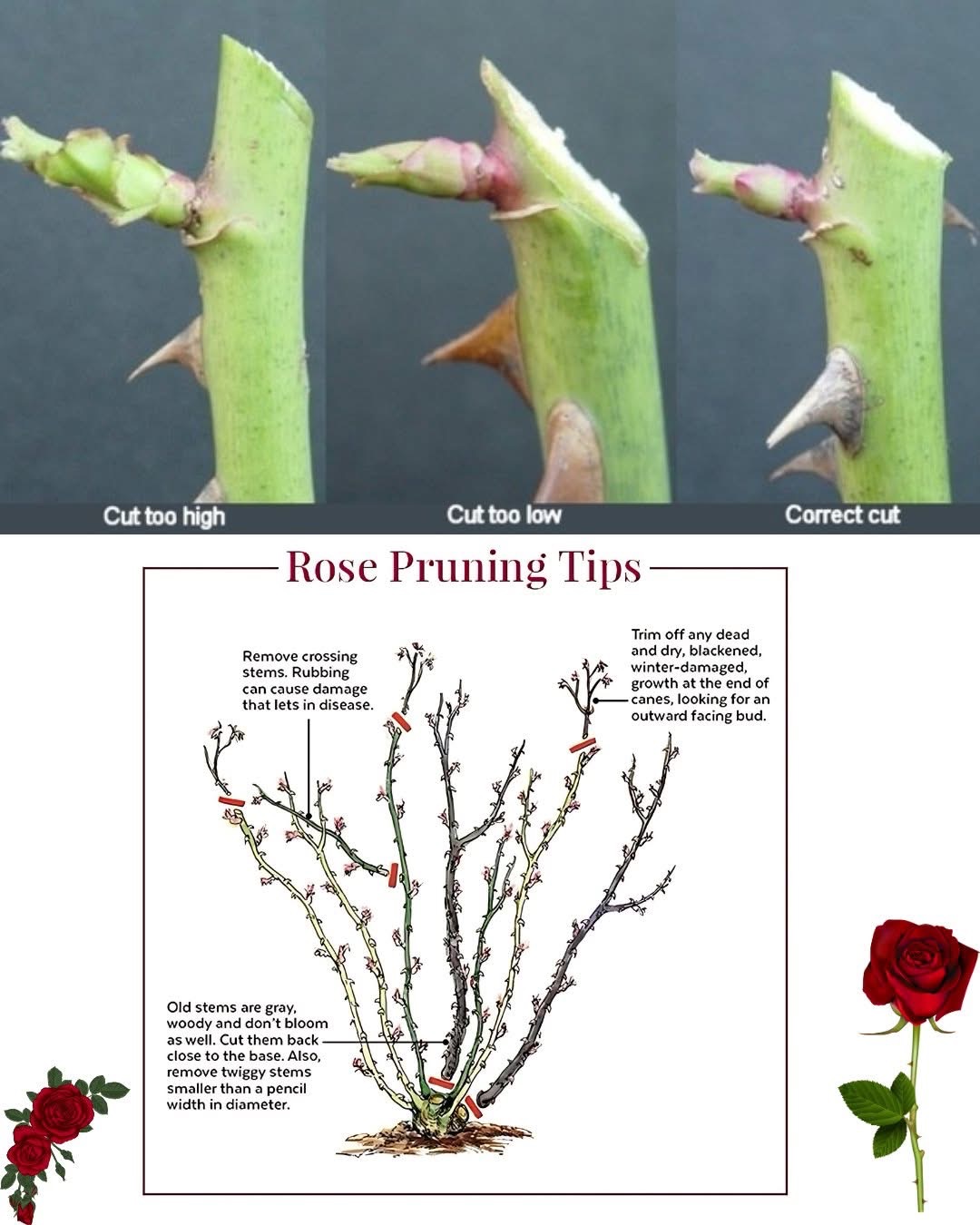
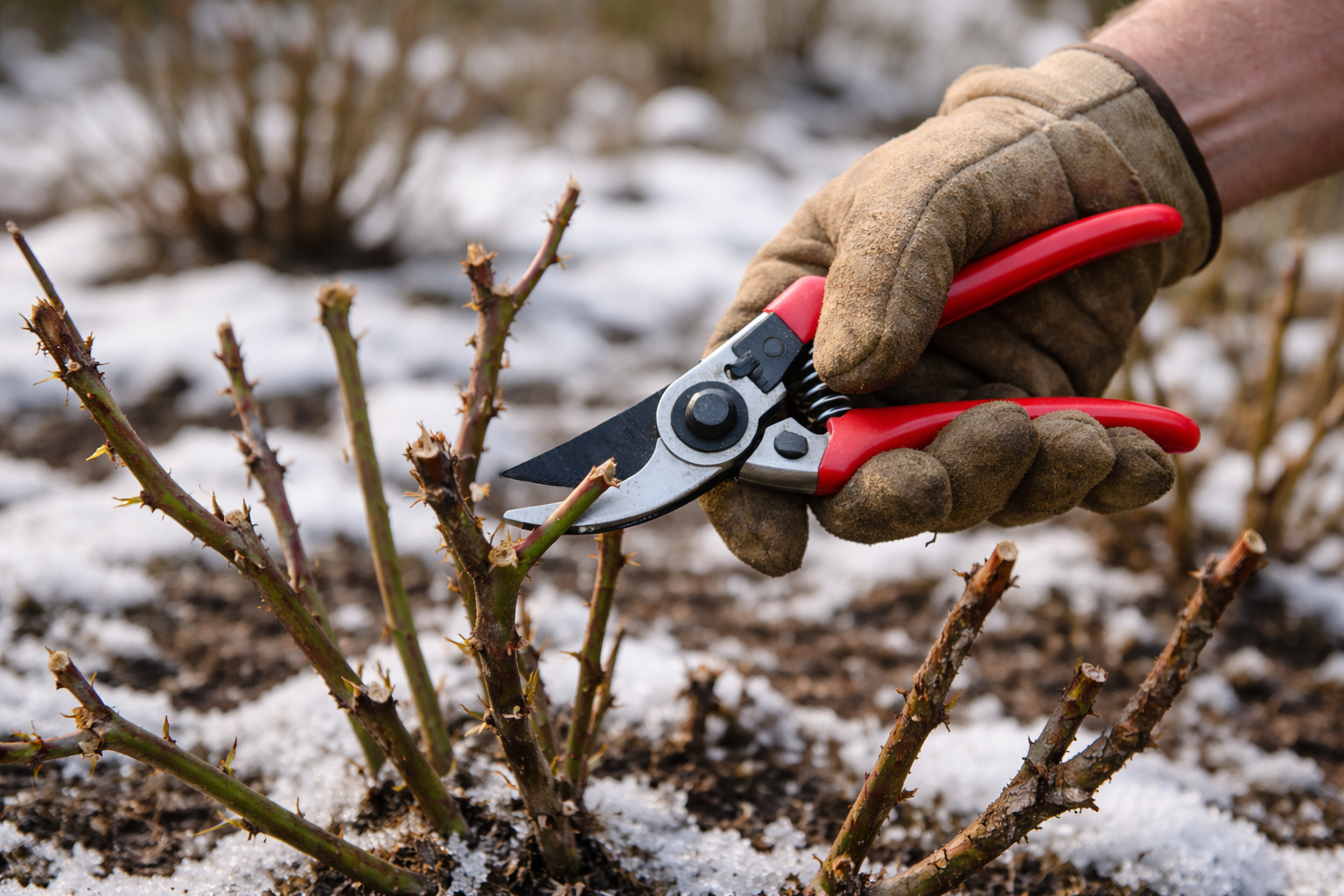
Start with clean, sharp secateurs. Cut back to strong, outward-facing buds, making sloping cuts about 5–10mm above the bud so water runs off. For bush and hybrid tea roses, the RHS advises reducing stems by roughly a third to a half, leaving a balanced framework of healthy shoots. Shrub roses are treated more lightly, focusing on thinning and shaping rather than hard reduction.
Charles Dowding, known for his natural and plant-led approach, encourages gardeners not to overthink rose pruning. His guidance aligns with pruning for clarity rather than control: remove what’s clearly unhelpful, then step back and assess before cutting more. Dowding emphasises working with the plant’s natural form and avoiding unnecessary intervention that can stress the rose.
Finally, clear away prunings and mulch well with compost or well-rotted manure to support strong regrowth. Feed in spring if needed, water during dry spells, and resist the urge to keep cutting through the season. As both the RHS and Dowding suggest in different ways, confident, timely pruning beats frequent fussing – and roses usually reward a calm hand.
Here’s a simple diagram: