

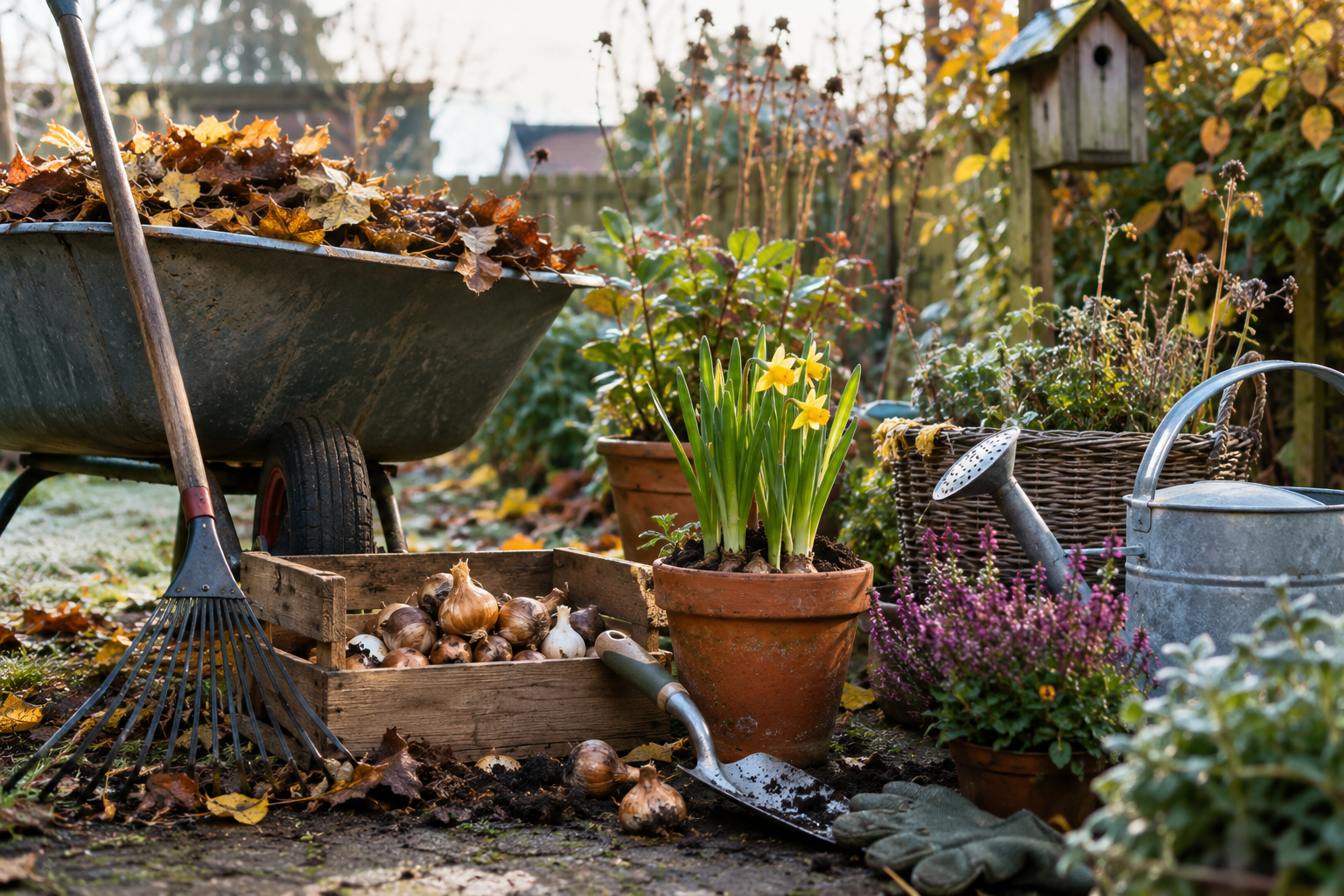
You don’t need to spend every weekend tidying the garden for winter. A few simple jobs now can make life easier in spring and give wildlife a helping hand along the way.
As the days shorten and temperatures begin to drop, it’s tempting to close the back door, put the gardening tools away and forget about the garden until spring. But autumn and early winter can be some of the most useful months in the gardening calendar.
The good news is that you don’t need a large garden, expensive equipment or years of experience to make a difference. Whether you have a small courtyard, a few pots on a balcony, an allotment or a typical British back garden, there are five jobs worth considering before winter properly sets in.
And no, they don’t all involve making everything neat and tidy.
- Look after your soil, not just your plants
One of the most useful things you can do in autumn is give your soil a little attention. After a summer of growing, watering and harvesting, the ground may be dry, compacted or short of organic matter.
If you have bare beds, consider spreading a layer of homemade garden compost or well-rotted organic matter over the surface. There’s usually no need to dig it in. Worms and other soil organisms will gradually help incorporate it, while the covering can protect the soil from heavy rain and reduce the amount of bare ground exposed to the weather.
If you grow in pots, remove dead plants and check whether the compost needs refreshing before the next growing season. Don’t automatically throw everything away, though. Depending on what you’ve grown, some compost can be reused or added to your compost heap.
Autumn is also a good time to start a compost heap if you haven’t already. Fallen leaves, vegetable peelings and suitable garden waste can all contribute, although woody material may take longer to break down.
Healthy soil is the foundation of a healthy garden. You don’t necessarily need another bottle of fertiliser to improve it.
- Plant bulbs and think ahead to spring
It’s easy to concentrate on the garden as it looks today, but autumn is when you can start planning for a brighter spring.
Spring-flowering bulbs such as daffodils, crocuses and many tulips are traditionally planted in autumn. Daffodils and crocuses can work particularly well in lawns, borders and containers, while pots can be a great option if you have limited space.
The key is to check the planting instructions for each variety. Most bulbs need well-drained soil, and containers must have adequate drainage holes to avoid waterlogging. Tulips are generally planted later in autumn than many other spring bulbs.
You don’t need to spend a fortune. A small pot of bulbs near the front door or a few planted around an existing border can bring welcome colour after the grey days of winter.
It’s also worth thinking about pollinators. Early-flowering plants can provide valuable food for insects emerging on milder days, so choosing a range of flowering plants can help your garden contribute to local wildlife.
And if you missed the ideal planting window, don’t give up. Gardening is rarely an exact science, and there are plenty of other opportunities to plant and grow throughout the year.
- Give wildlife somewhere to shelter
A garden doesn’t have to look immaculate to be a good garden. In fact, removing every fallen leaf, seed head and dead stem can remove valuable food and shelter for wildlife.
Before reaching for the rake, consider where leaves could be left to break down naturally. Under shrubs, around the base of suitable trees and in quiet corners, they can provide habitat for invertebrates and improve the soil over time.
You could also gather some leaves into a simple wire enclosure to make leaf mould. This takes time to mature, but it can eventually become a useful soil improver.
If you have suitable space, leave a small area of the garden a little wilder. A pile of logs or branches can provide shelter for a range of small creatures, while seed heads left standing may provide food for birds.
There are limits, of course. Keep leaves away from ponds where they could affect water quality, remove them from paths where they become slippery, and clear them from lawns if a thick, wet covering is likely to smother the grass.
If you have a bird feeder, keep it clean and provide fresh water where possible. Small actions can make a difference, particularly when natural food becomes harder to find.
The important point is that a wildlife-friendly garden doesn’t have to be untidy everywhere. A little balance between managed space and natural habitat can benefit both gardeners and wildlife.
- Protect vulnerable plants, pots and garden equipment
Winter weather can be unpredictable. Heavy rain, frost, strong winds and occasional snow can all cause problems, particularly for plants growing in containers.
Start by checking which plants are hardy enough to remain outside and which need protection. Tender plants may need to move into a greenhouse, conservatory or sheltered position. If you use horticultural fleece, make sure it is suitable for the plant and secured properly.
Move vulnerable pots away from exposed positions where possible. Raise containers slightly on pot feet or suitable supports to help excess water drain away, and check that drainage holes are not blocked.
Remember that roots in containers are more exposed to cold than roots in the ground. A plant that survives outside in a border may need extra protection in a pot.
It’s also worth giving your garden tools a little attention before putting them away. Clean soil from spades and trowels, dry metal surfaces to reduce rust, and clean and sharpen secateurs where appropriate. Drain hoses and store them somewhere protected from frost if possible.
Check fences, greenhouse panels and loose garden structures before strong winds arrive. A little maintenance now could save money and effort later.
You don’t need to tackle everything in one afternoon. A few jobs spread over several weekends can be much more manageable.
- Plan next year’s garden – and learn from this year’s
This final job costs very little but can be one of the most valuable.
Take a walk around your garden and think about what worked this year. Which plants thrived? What struggled during dry weather? Did containers need constant watering? Were there areas that received too much shade, or spaces that could have been used more effectively?
If you grew vegetables, make a note of what you harvested and what you would grow again. If you struggled with pests or disease, record what happened while it’s still fresh in your mind.
You don’t need a complicated spreadsheet. A notebook, a few photographs or notes on your phone will do.
Autumn and winter are also a good time to think about water use. Could you collect rainwater, add mulch to reduce evaporation, or choose plants better suited to your conditions? If summer watering became a chore, it might be worth changing your planting choices rather than simply buying more equipment.
For anyone gardening in a small space, consider whether containers could be rearranged, whether vertical growing would help, or whether a few carefully chosen plants might work better than lots of pots competing for attention.
And if something failed, don’t automatically blame yourself. Weather, soil conditions, pests and plant suitability can all play a part. Gardening is an ongoing learning process, not a test you pass or fail.
A final thought: don’t feel you have to do it all
There is a temptation to treat autumn as a race to get everything finished before winter arrives. But gardens are living spaces, and they don’t need to be cleared, cut back and tidied into submission.
Some jobs genuinely matter: protecting tender plants, preventing slippery paths, checking drainage and looking after vulnerable structures. Others can wait, and some are better left alone to benefit wildlife.
If you’re new to gardening, start with one or two manageable jobs. If you have been gardening for years, perhaps use this season to try something different, such as leaving a small patch for wildlife or improving the soil without digging.
The best garden is not necessarily the neatest, the most expensive or the one with the most plants. It’s the one that works for you, your space and the natural world around it.
So, as autumn turns to winter, take a little time to prepare your garden for the colder months. Then put the kettle on, enjoy the view and remember that spring is already waiting in the wings.
Happy growing!