

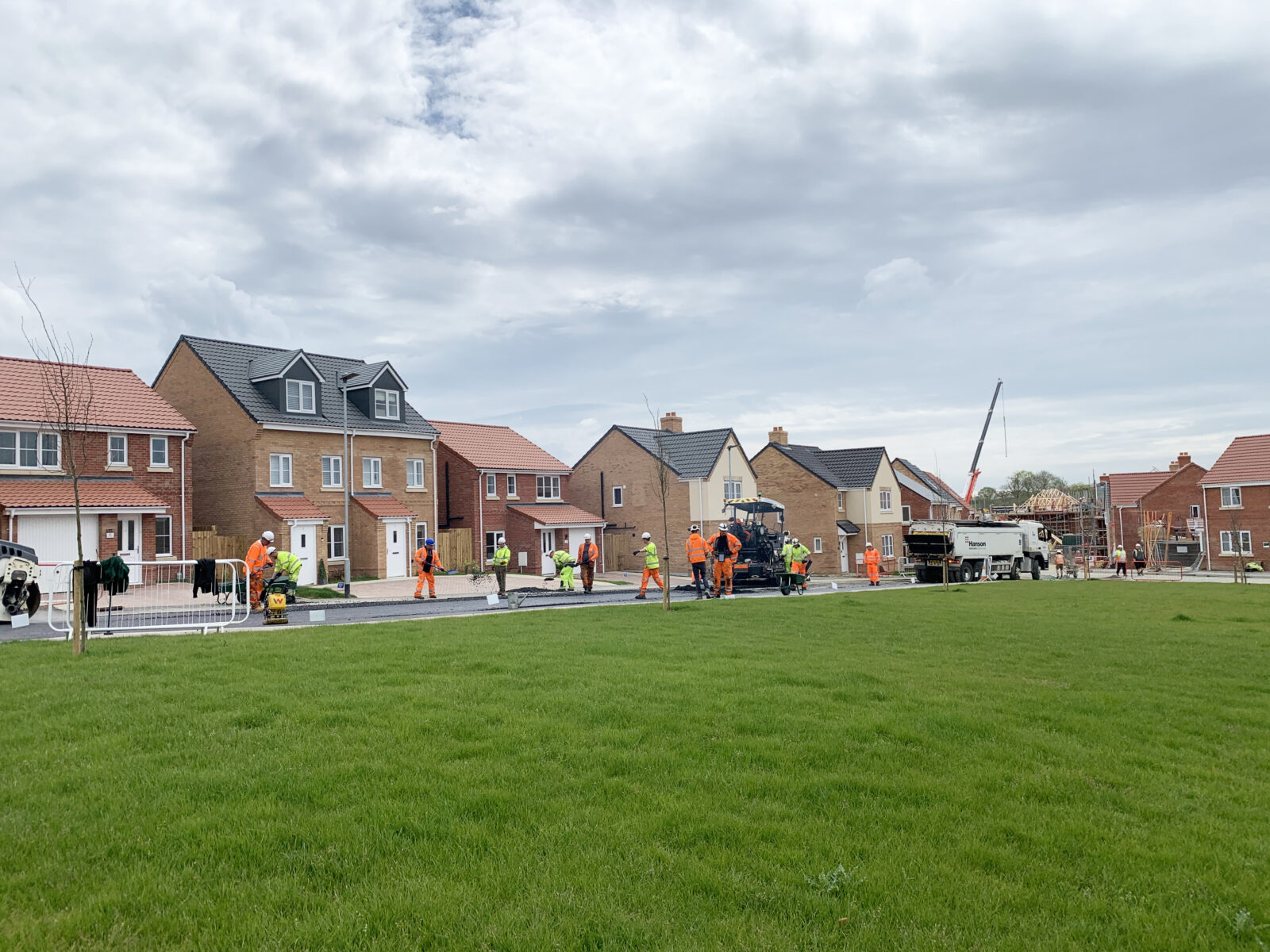
New research raises uncomfortable questions about whether homeowners are being left to pick up the environmental bill when promised trees and wildlife features fail on new housing developments
Buying a new home is supposed to mean buying into a new community – and increasingly, that community is sold with promises of green spaces, trees, hedgerows and wildlife.
But what happens when the promised nature never arrives?
Or when the trees are planted, die and quietly disappear?
New research into housing developments across England suggests that this is not an isolated problem. It raises a much bigger question for homeowners, planners and housebuilders: should the people buying the houses ultimately have to pay to restore the environmental features that were supposed to be delivered by the developer in the first place?
A University of Sheffield study commissioned by Wild Justice examined 42 completed housing developments covering almost 6,000 homes. Researchers compared what developers had promised through planning requirements with what was actually present on the finished developments.
The results were stark.
Thirty-nine per cent of the trees detailed on planting plans were either missing or dead.
Overall, just 53% of the ecological enhancements promised by developers had actually been delivered, including trees, hedgerows, ponds, bird and bat boxes and other wildlife features.
The problem is not simply that trees die.
A separate 2025 study into urban tree planting in England found that, on development sites, 23% of the trees specified on approved planting schemes had never been planted at all. Of the trees that had been planted and subsequently surveyed, 21% had died or been removed. Only 42% of all surveyed trees were classified as being in good condition.
That should make anyone buying a new home stop and think.
A tree on a plan isn’t necessarily a tree in the future
There is a fundamental difference between planting a tree and establishing a tree.
A developer can satisfy the visual expectation of a planning application by putting a young tree into the ground. But that tree then needs good soil, adequate water, protection from machinery, appropriate staking, weed management and several years of aftercare.
The research suggests that this establishment stage is where many schemes are failing.
The Fund4Trees study found widespread problems with development-led trees, including damage and poor establishment. In its wider sample, 66% of development trees showed lower-trunk damage and 74% of staked trees had incorrect staking.
In other words, simply counting the number of trees planted on the day a development is completed tells us very little about how successful the environmental scheme will be ten or twenty years later.
And this matters because a mature tree is not simply decoration.
It provides shade, stores carbon, supports insects and birds, helps manage rainfall, reduces urban heat and contributes to the character and value of a neighbourhood.
A dead sapling cannot do those things.
So who is responsible?
This is where the argument becomes uncomfortable.
England’s Biodiversity Net Gain system is intended to ensure that qualifying developments leave biodiversity in a better state than before. Developers are generally required to deliver a minimum 10% biodiversity net gain, with the resulting habitat secured and managed for at least 30 years.
But the evidence from completed developments suggests that planning promises and reality can be very different.
That raises a simple question:
If a developer sells a home on the basis of a development containing trees, hedges and green infrastructure, should the responsibility for maintaining those environmental assets pass to the homeowner when the development is completed?
There is a particularly awkward version of that question.
Imagine buying a new house with a small garden.
The developer has removed an existing landscape, built the house and roads, installed communal planting and promised ecological enhancements as part of obtaining planning permission.
A few years later, some of the communal trees have died.
The grass is struggling.
The planting has failed.
The biodiversity features have disappeared.
The homeowner is then encouraged to buy a tree, create a wildlife garden, install a pond, plant native hedging and turn part of their own garden into a biodiversity haven.
Why should they have to?
Of course, homeowners should be encouraged to garden for wildlife. Private gardens collectively form an important part of the UK’s urban environment.
But encouragement is very different from transferring responsibility.
Are homeowners being asked to fix someone else’s environmental debt?
There is an important distinction here.
If a homeowner chooses to replace a dying developer-planted tree with a mature specimen, create a wildflower area or plant a native hedge, that is a positive thing.
But it shouldn’t become an unofficial substitute for the developer fulfilling its obligations.
Otherwise, there is a danger of creating a peculiar system in which:
The developer gets planning permission by promising nature.
The developer builds the houses.
The developer sells the houses.
The ecological features subsequently fail.
And the homeowner buys the plants to put it right.
That isn’t really biodiversity net gain.
It is biodiversity cost-shifting.
The hidden cost of a “green” development
There is also a financial question.
Homeowners buying new properties are already facing the costs of furnishing, landscaping and maintaining their gardens.
A garden that is little more than compacted soil, poor-quality turf and a few struggling ornamental shrubs can require significant expenditure to turn into a genuinely wildlife-friendly space.
Trees aren’t necessarily cheap either.
A decent young tree, suitable soil improvement, mulch, supports and several years of watering and maintenance can quickly become a meaningful household expense.
Multiply that across thousands of homes and the numbers become significant.
And that is before considering the cost to councils and communities when failed planting has to be replaced.
If a tree is part of an approved development scheme, there is a reasonable argument that the developer should remain responsible for its successful establishment rather than simply its initial installation.
We need to stop measuring green infrastructure at the point of planting
Perhaps the biggest lesson from the research is that Britain needs to change what it considers “success”.
A newly planted sapling should not automatically count as a successful environmental intervention.
The real test should be:
Is the tree alive?
Is it healthy?
Is it establishing properly?
Is it likely to become the mature tree promised by the development?
And perhaps most importantly:
Who is responsible if it doesn’t?
The research from the University of Sheffield provides a worrying indication of what happens when enforcement and monitoring are weak. Researchers found that 39% of trees specified in planting plans were missing or dead, while other promised wildlife features were also routinely absent.
The issue is becoming even more relevant as the Government continues to adjust the rules surrounding Biodiversity Net Gain and housing delivery. Current Government guidance requires qualifying developments in England to provide a 10% biodiversity net gain, although exemptions and implementation rules have changed during 2026.
What should happen next?
There is a strong case for changing the way ecological commitments are monitored on new housing estates.
Instead of signing off environmental obligations when the landscaping contractor has finished, councils could require developers to demonstrate successful establishment after a defined period.
Three years might be a starting point.
Five years would be even more meaningful.
And developers could be required to replace failed trees and ecological features during that period rather than leaving the cost with the eventual residents or council.
It would also make sense for planning conditions to specify not simply the number of trees planted, but the quality, species, size, location and establishment requirements.
Because there is a world of difference between planting 100 trees and establishing 100 healthy trees.
And what about the homeowner?
None of this means homeowners shouldn’t play their part.
Far from it.
A new-build garden can become an extraordinary opportunity for nature.
A small native tree, a hedge instead of a fence, a few wildflowers, a log pile, a pond or simply leaving part of the lawn to grow can collectively make a significant difference.
But that should be an additional contribution by residents, not compensation for an environmental obligation that somebody else failed to fulfil.
There is something fundamentally wrong if a family spends hundreds of thousands of pounds buying a new home and then discovers that the promised green infrastructure has failed – only to be told, effectively, that they can put it right themselves.
The question we should now be asking
Britain needs more homes.
It also desperately needs more nature.
Those two objectives do not have to be enemies.
But if developers are going to sell new communities on the basis of greener neighbourhoods, then perhaps the definition of “green” needs to become much tougher.
A tree planted for the planning photograph isn’t enough.
A tree that survives, establishes and eventually becomes part of the neighbourhood is.
And that leaves one uncomfortable question for developers, planners and government:
Should homeowners really be expected to pay for rewilding their gardens and replacing failed planting to compensate for environmental commitments that were supposed to be delivered as part of the development in the first place?
Perhaps the real principle should be simple:
If the developer promises nature, the developer should be responsible for making sure that nature survives.
Only then can “green development” become more than something written into a planning application and printed in a glossy housebuilder brochure.