

Don’t panic, don’t reach for the hose and don’t start ripping things out. Britain’s gardens are under serious drought stress, but there are practical things gardeners can do right now to give plants a fighting chance.
Walk into almost any garden across Suffolk, Essex, Norfolk, Cambridgeshire or the wider South and East at the moment and the signs are obvious.
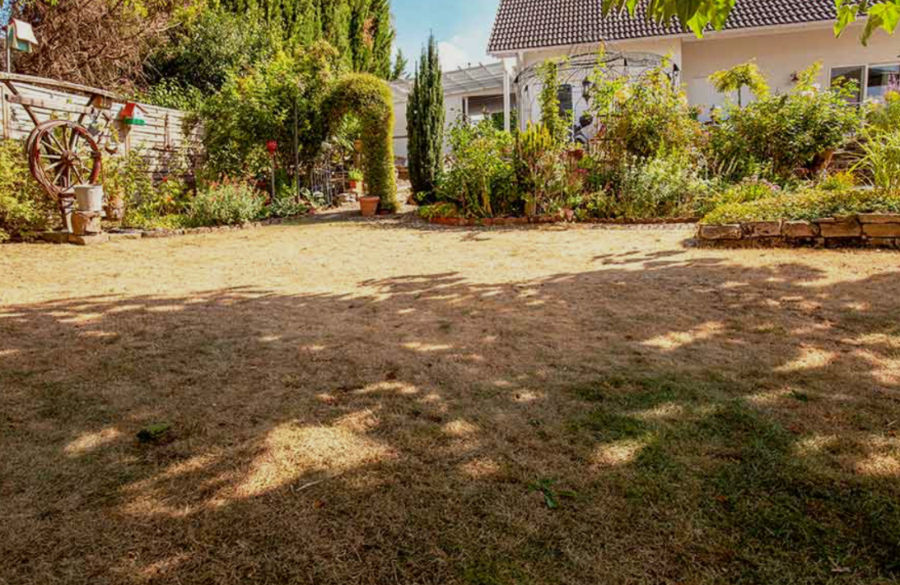
Brown lawns. Drooping leaves. Crispy borders. Hydrangeas hanging their heads. Containers drying out almost as quickly as they can be watered.
For gardeners who have spent months nurturing their plants, it can be heartbreaking.
But there is an important message from British horticultural thinking: a garden that looks dreadful today is not necessarily a garden that is dying.
Plants have survival mechanisms. Some will stop growing, shed leaves or allow foliage to wilt in order to conserve water. Established lawns can turn completely brown and still recover when rainfall returns.
So before reaching for the hose, take a breath.
Your job now is not to make the garden look green.
Your job is to help it survive.
- Don’t water everything
This is probably the hardest lesson.
When a garden is visibly suffering, the natural reaction is to water the lot.
But during drought, that can be both wasteful and ineffective.
Prioritise.
Water first:
- Newly planted trees and shrubs
- Young plants still establishing their roots
- Plants in containers
- Vegetable crops that are flowering, fruiting or forming edible roots
- Plants showing serious drought stress
- Anything particularly vulnerable to dry conditions
Established shrubs and perennials that are naturally capable of coping with dry conditions should generally be left alone.
The RHS advises that established lawns rarely need watering, even when they turn brown. Once rain arrives, they can green up again.
Don’t waste precious water trying to make your lawn green.
- Give plants a proper drink – not a shower
If something genuinely needs water, do it properly.
A light sprinkling over the leaves and soil surface may make the garden look refreshed for half an hour, but much of that water will evaporate before reaching the roots.
Instead, water slowly and thoroughly around the root zone.
The RHS recommends deep, occasional watering because it encourages roots to grow deeper, helping plants become more resilient to drought. Watering cans also give gardeners much greater control over where water goes than sprinklers.
And timing matters.
Early morning is ideal.
Late evening is also acceptable, but watering in the middle of a hot day is the least efficient option because evaporation is high.
Think of it as giving the plant a drink rather than giving the garden a wash.
- Forget the leaves – water the soil
A wilted plant can tempt us to spray its foliage.
Don’t.
Get the water to the ground around the plant instead.
The roots are where the water needs to go.
For established plants, concentrate water around the area where the roots are most active rather than soaking huge areas of empty soil.
If the ground has become extremely dry and water initially runs off the surface, apply water slowly, allow it to soak in and then repeat rather than flooding the area all at once.
The objective is to get moisture down into the root zone.
- Put the hose away from the lawn
This may be difficult for the traditional British gardener to accept, but brown grass is not necessarily a gardening emergency.
Established lawns can tolerate drought and go dormant. The RHS specifically advises against watering established lawns during summer drought, even when they turn brown.
So let it go brown.
Raise the mower blades if you have to cut it, and don’t scalp already stressed grass.
Longer grass provides more shade to the soil and is better able to cope with dry conditions.
There is something liberating about accepting that your lawn doesn’t need to look like a football pitch in August.
- Move your pots
Containers are among the biggest casualties of drought because they have a limited volume of soil and can heat up rapidly.
If possible, move vulnerable pots out of the fiercest afternoon sun.
A few hours of shade can make a remarkable difference.
Put saucers underneath containers to catch water that would otherwise disappear through the drainage holes. The RHS recommends drip trays as a way of retaining both water and nutrients in pots.
But don’t leave permanently waterlogged pots sitting in saucers once conditions change.
And remember that plants in containers will generally need more attention than the same plants growing in the ground.
- Give the soil some shade
This is one of the simplest things you can do.
Bare, dry soil is losing water.
A mulch helps reduce evaporation from the surface and keeps the soil cooler.
Garden compost, well-rotted organic matter and suitable bark-based mulches can all help conserve moisture. The RHS recommends mulching as one of the key ways gardeners can reduce water loss.
However, there is an important right-now caveat.
If your borders are already bone dry, don’t start digging them over simply to add compost.
The RHS currently advises against unnecessary disturbance of established soil during severe drought because it can make it harder for future rainfall to penetrate. Instead, concentrate on protecting existing plants and consider more extensive soil improvement when wetter conditions return.
In other words:
Don’t make a bad situation worse.
- Give young trees special treatment
If there is one group of plants that deserves particular attention, it is newly planted trees.
A mature tree has an established root system. A tree planted last autumn doesn’t.
The RHS recommends keeping the area around young trees free of competing grass and weeds and watering newly planted trees regularly during establishment. Larger specimens can require watering for several years after planting.
If you only have enough water to save a few things, save the young trees.
They are the garden’s investment in the future.
- Don’t fertilise a plant that’s struggling
It can seem logical that a stressed plant needs feeding.
Usually, this is not the moment.
Fertiliser encourages new growth – and new growth needs water.
The RHS specifically advises avoiding fertilisers in drought conditions because they can encourage lush, soft growth that is more susceptible to drying out.
Right now, survival is more important than pushing plants into producing more foliage or flowers.
- Your vegetable garden needs triage too
Growing your own food is particularly frustrating during drought.
You have invested seeds, time and effort into crops and don’t want to watch them fail.
But again, prioritise.
Crops such as lettuce, potatoes and cauliflowers are particularly vulnerable to drought stress and need careful watering at critical stages.
Focus your available water where it will make the biggest difference.
A vegetable plant that is flowering or producing fruit is often worth saving over a crop that is struggling to establish.
And if something has already completely failed, accept it.
Pull it out when appropriate, compost the healthy material and move on.
Don’t waste litres of water trying to resurrect a crop that has already gone.
- Help the wildlife while you’re helping the garden
A drought doesn’t just affect plants.
Birds, bees, butterflies and other wildlife are also looking for water and food.
A shallow container of clean water can provide an important drinking and bathing point for birds and insects.
Keep it somewhere safe and refresh it regularly.
And if you have flowering plants that are still performing, they can become disproportionately valuable during dry conditions.
The RHS recommends continuing to support nectar-producing plants during drought, including pollinator-friendly summer flowers, because severe thirst can reduce nectar production.
So if you have one flowering patch still buzzing with bees, look after it.
It may be one of the most valuable parts of your garden right now.
- Stop judging your garden by its colour
This might be the most important piece of advice of all.
We have become accustomed to judging a garden by whether it looks green, lush and immaculate.
But a drought-stressed garden isn’t necessarily an unhealthy garden.
Some plants will wilt.
Some leaves will scorch.
Some lawns will turn brown.
Some flowers will disappear.
That doesn’t automatically mean you have failed.
The RHS’s research following extreme heat has shown just how badly some familiar garden favourites can suffer, with hydrangeas, acers, fuchsias, astilbes, roses, anemones, ferns, heucheras, phlox and crocosmias among the plants reporting the greatest damage.
These plants aren’t necessarily dead.
Give them time.
Don’t prune aggressively simply because the foliage looks terrible. Don’t dig up every scorched perennial. Don’t assume brown means finished.
Wait and see what recovers.
- Start collecting water before the next rain
When the rain eventually comes, we need to be ready for it.
Water butts are not glamorous, but they are becoming increasingly important pieces of garden infrastructure.
The RHS estimates that even a small shed roof in dry South East England can collect around 2,500-3,500 litres of rainwater a year. Linking water butts together can increase storage where space allows.
And this is where the current drought offers us a valuable lesson.
We shouldn’t think about rainwater collection only when it hasn’t rained for six weeks.
We should collect it when it does rain.
Because increasingly, the problem may be too much water one month and too little the next.
So what should you do this afternoon?
If your garden looks scorched, don’t attempt a complete rescue operation.
Walk around with a watering can and make some decisions.
Save the young trees.
Save recently planted shrubs and perennials.
Save the vegetables that still have a realistic chance.
Give valuable container plants a drink and some shade.
Leave the established lawn alone.
Don’t fertilise.
Don’t dig over bone-dry borders.
Don’t waste water spraying leaves.
Water slowly into the root zone, preferably early in the morning.
Give struggling soil some protection from the sun.
Give wildlife a reliable source of clean water.
And then step back.
Your garden doesn’t need to look perfect.
It needs to survive.
Because when the rain eventually arrives – and it will – the gardens that have been allowed to slow down, conserve their resources and protect their roots will have a much better chance of bouncing back.
Perhaps that’s the real lesson from this extraordinary summer.
“Gardening isn’t always about making things grow.
Sometimes the best gardening you can do is simply help things survive until nature takes over again.”