

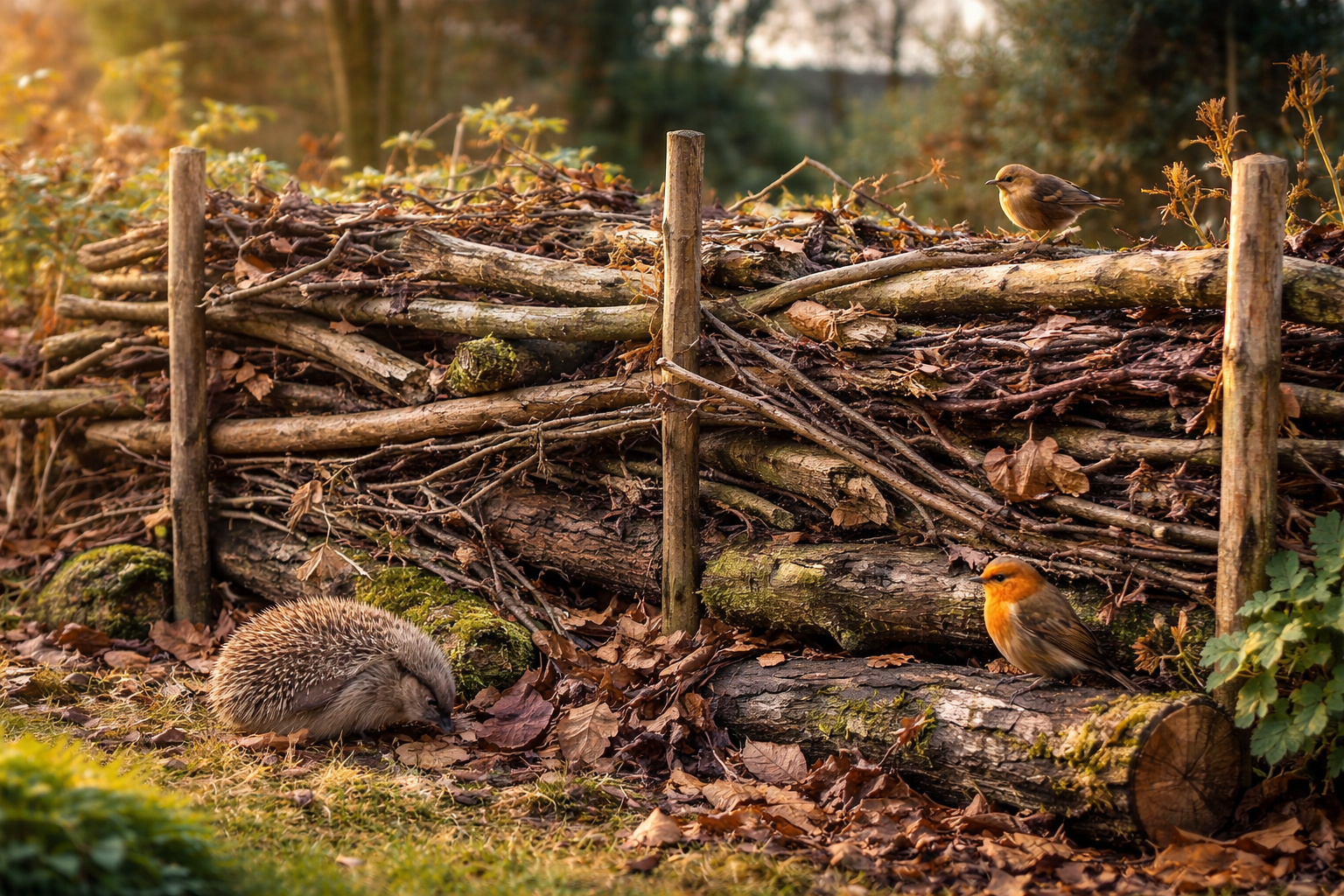
Creating a dead hedge in your garden sounds like an odd idea at first – after all, who wants a hedge made of dead wood? But for wildlife, these simple structures are packed with life. A dead hedge is built by stacking pruned branches and woody garden waste between upright stakes, turning seasonal cuttings into shelter, food and habitat for creatures that struggle during the winter months – from beetles and hedgehogs to nesting birds and amphibians.
For conservation groups like the Avon Wildlife Trust, dead hedges are celebrated as natural barriers that double as linear habitats. Unlike solid fences or walls, a dead hedge blends with the landscape and provides gaps and crevices where insects, small mammals and reptiles can shelter, forage and move freely through a garden or green space. They connect habitats, helping wildlife travel safely between gardens, hedgerows and open countryside.
The benefits start at the smallest scale. As the wood slowly decomposes, fungi, beetles and other invertebrates colonise the hedge – creating a rich micro-ecosystem. Those insects become vital food for birds such as robins and wrens, and contribute to natural pest control within your garden. This cycle of decay and renewal echoes a key message from WWF’s work on deadwood biodiversity: decaying wood is not waste, it’s habitat for a remarkable array of species, many of which are in decline when deadwood is removed from managed landscapes.
A dead hedge also makes practical sense for gardeners. Rather than burning or disposing of woody cuttings, you can repurpose them into a structure that benefits nature and looks natural in the landscape. It can serve as a windbreak, a natural border between garden zones, or even a backdrop for native wildflowers and climbers, adding both ecological and aesthetic value.
Perhaps most importantly, building a dead hedge is something anyone can do – and add to over time. With every seasonal prune and garden tidy, your hedge grows richer and more diverse. In doing so, it plays a small but meaningful part in supporting biodiversity right from your garden, helping wildlife thrive even in months when food and shelter are scarce.